1 Project Overview
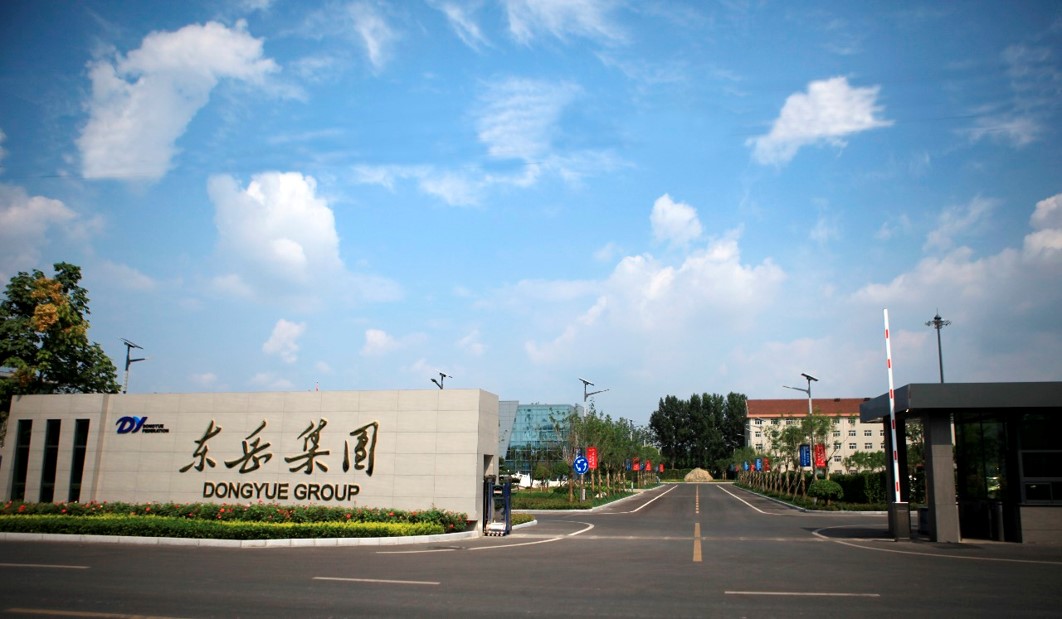
Dongyue Group’s total nitrogen deep treatment project is located in the Fluorochemical Industrial Park of Huantai County, Zibo City, Shandong Province. The Dongyue Group Total Nitrogen Deep Removal Project is a key environmental upgrade project located in the Fluorochemical Industrial Park of Huantai County, Zibo City, Shandong Province, China.
The project focuses on advanced total nitrogen (TN) removal for high-strength industrial wastewater generated from fluorochemical production processes. With a treatment capacity of 10,000 m³/day, the project plays a critical role in ensuring stable compliance with increasingly stringent nitrogen discharge standards and supporting the park’s green transformation and circular economy development.
After completion, the project significantly enhances the deep nitrogen removal capability of the industrial park and serves as a demonstration project for advanced denitrification in China’s chemical industry.
2 Project Information
| Item | Details |
|---|---|
| Project Name | Dongyue Group Total Nitrogen Deep Removal Project |
| Location | Zibo City, Shandong Province, China |
| Project Type | Chemical Wastewater Deep Treatment |
| Treatment Capacity | 10,000 m³/day |
| Industry | Fluorochemical Industry |
| Service Scope | Process design, equipment supply, installation, commissioning |
| Core Process | Sulfur-Based Autotrophic Denitrification |
3 Challenges
With continuously tightening environmental regulations, conventional biological systems struggle to meet deep nitrogen removal requirements in chemical wastewater treatment.
Key challenges included:
- High total nitrogen concentration with strong fluctuation
- High cost of external carbon source dosing
- Limited efficiency of conventional denitrification processes
- Complex chemical wastewater composition
- Increasingly strict discharge standards
- High requirements for system stability and reliability
Core Challenge
Achieve stable, low-cost, and high-efficiency deep total nitrogen removal under complex chemical wastewater conditions
4 Engineering Solution
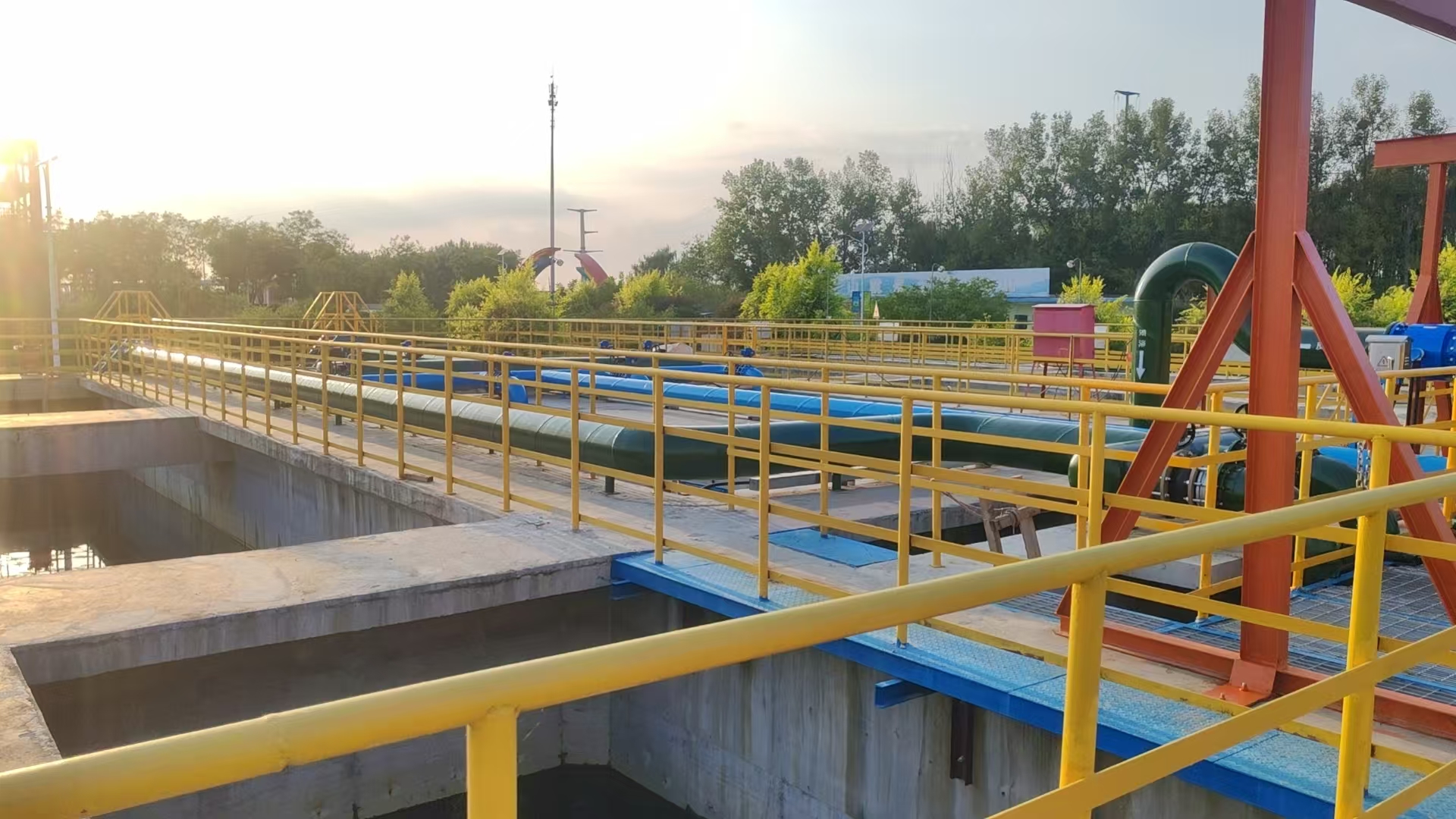
SYNERAQUA implemented a sulfur-based autotrophic denitrification process designed for high-efficiency nitrogen removal without external carbon source dosing.
Process Flow
Pretreatment → Sulfur-Based Autotrophic Denitrification System → Effluent Discharge
Engineering Concept
The system utilizes sulfur-oxidizing autotrophic bacteria as electron donors, replacing traditional organic carbon sources. This enables efficient nitrate removal while significantly reducing operating costs and sludge production..
5 Scope of Work
SYNERAQUA was responsible for:
- Process design and engineering optimization
- Sulfur-based denitrification system supply
- Equipment integration and installation support
- Electrical and instrumentation works
- Automation and PLC control system implementation
- Commissioning and performance testing
- Operator training and technical support
6 Key Technologies and Engineering Highlights
Sulfur-Based Autotrophic Denitrification Technology enabling carbon-free nitrogen removal
Online Total Nitrogen Monitoring System ensuring real-time process control
Intelligent Automation Platform optimizing system stability and performance
Low-Carbon Operation Mode significantly reducing chemical consumption and operating cost
High-Stability Process Design suitable for fluctuating industrial wastewater conditions
7 Performance Results
| Item | Data |
|---|---|
| Treatment Capacity | 10,000 m³/day |
| Effluent Total Nitrogen | ≤ 10 mg/L |
| Automation Level | Fully automated operation |
| System Stability | >99% |
| Carbon Source Consumption | Significantly reduced |
8 Project Value
The project enables stable compliance of total nitrogen discharge in the industrial park while significantly reducing operating costs and improving environmental performance.
Key contributions include:
- Stable deep nitrogen removal for fluorochemical wastewater
- Significant reduction in carbon source consumption
- Improved regulatory compliance capability
- Enhanced sustainability of chemical industrial operations
- Demonstration of advanced low-carbon denitrification technology


